Motorcycle Armor & Protection Guide
Motorcycle armor is only one part of a protective riding system. The right setup combines impact protection, abrasion-resistant construction, secure retention, suitable coverage and a fit that keeps each protector where it is intended to work.
What Protection Should Motorcycle Gear Have?
✓
Quick Answer
For performance-oriented riding, motorcycle gear should provide appropriate impact protection at the major injury-prone zones, effective abrasion-resistant outer construction, secure retention of the protectors and a fit that keeps the protection correctly positioned. Common protection zones include the shoulders, elbows, knees, hips, back and chest. Airbag systems can provide additional protection, while external sliders are designed for controlled contact and are not a substitute for impact armor.
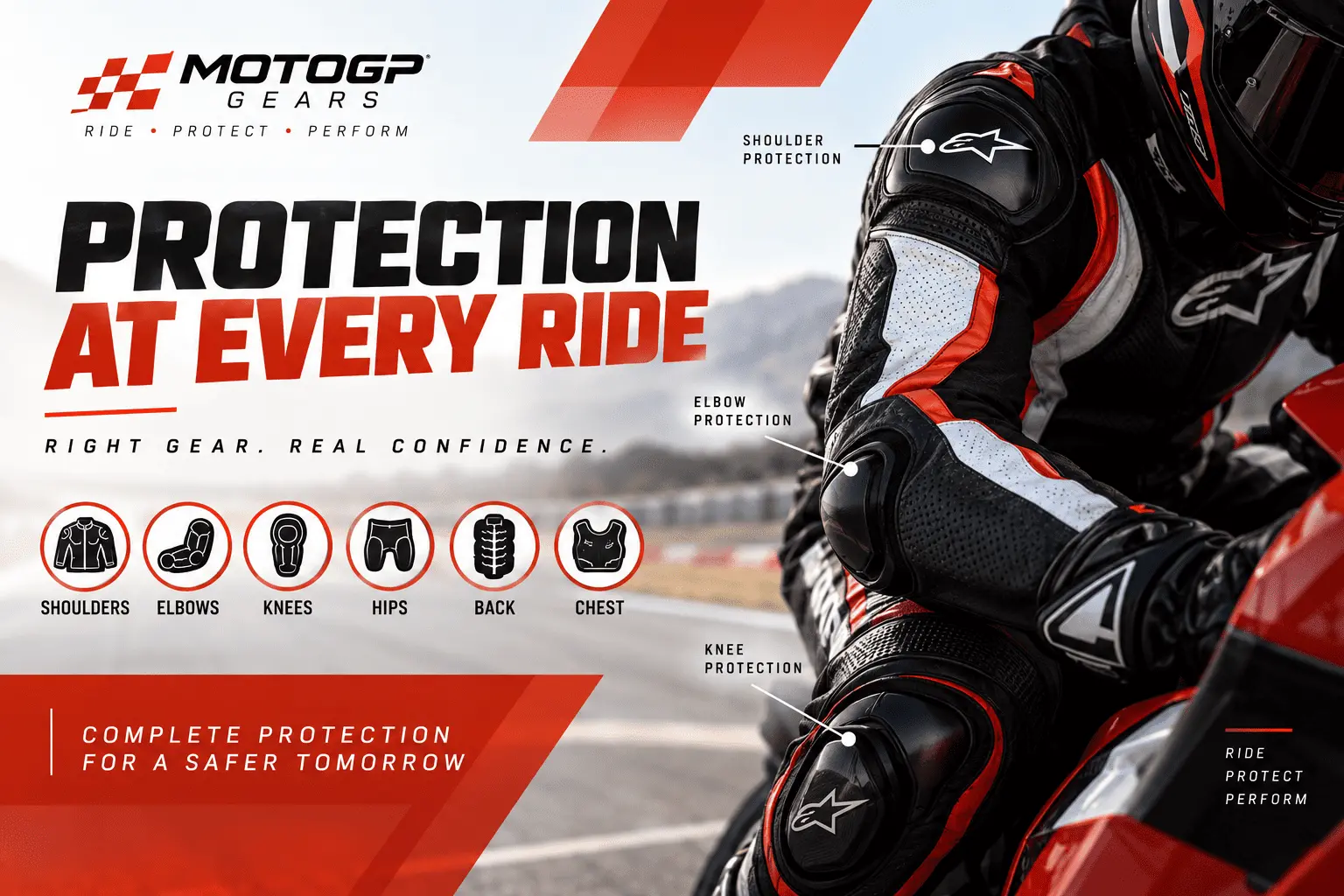
The important distinction is between the garment and the protectors installed in the garment. A motorcycle jacket or suit can have an abrasion-resistant shell while using separately tested shoulder, elbow, knee, back or chest protectors. Garment standards and protector standards therefore answer different questions.
Think in Systems, Not Isolated Pads
A highly rated protector cannot compensate for poor fit, missing coverage, loose retention or protection that is positioned incorrectly. The complete protective system matters.
CE Armor Basics: What Does CE Actually Tell You?
In the European market, CE marking relates to conformity with applicable EU legislation. For motorcycle protective equipment that falls within its scope, the relevant PPE framework establishes requirements for the design and manufacture of personal protective equipment.
Important Distinction
“CE approved” is not enough information to choose between two pieces of motorcycle gear. Check which garment or protector standard applies, which areas are protected, what protection level is specified and whether the claimed certification applies to the actual product.
01
Garment Standard
A garment standard evaluates the protective clothing system, including requirements related to the garment's protective performance and construction.
02
Protector Standard
A protector standard evaluates an impact-protection component such as a limb, back or chest protector.
CE Level 1 vs Level 2 Armor
Level 1 and Level 2 are performance levels used by relevant protector standards. Level 2 provides a higher protection-performance threshold than Level 1 within the applicable test framework, although protector design can involve trade-offs in weight, flexibility and comfort.
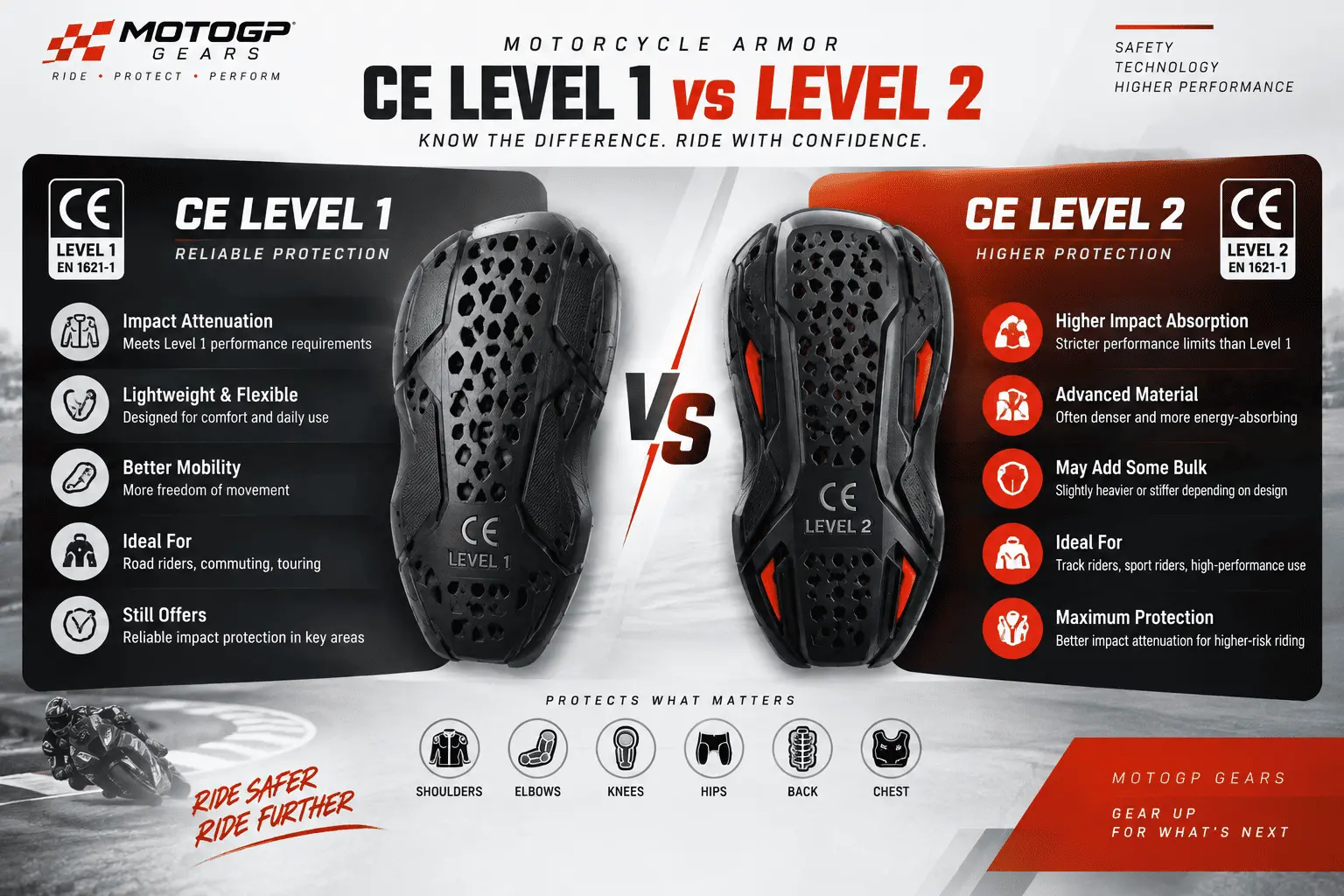
Level 1
Lower performance threshold
Protection: Lower performance threshold than Level 2.
Comfort: Can offer a lighter or more flexible construction.
Important: Correct fit and secure positioning remain essential.
Level 2
Higher protection performance
Protection: Higher protection performance within the applicable standard.
Comfort: May add some bulk or rigidity depending on design.
Important: Higher protection should still be combined with correct fit and retention.
Rider-Focused Takeaway
Level 2 is not automatically the right choice if a protector fits badly, moves out of position or makes the garment uncomfortable enough that the rider avoids using it.
Shoulder & Elbow Protection
Shoulder and elbow areas combine impact exposure with significant movement. Protectors therefore need to balance impact attenuation, coverage, articulation and retention.
Shoulders
Shoulder armor should sit over the intended anatomical area and remain positioned during normal riding movement.
Elbows
Elbow protection needs secure positioning without preventing normal steering and control movement.
Knee & Hip Protection
Knee protection is especially important in sport and track-oriented gear because the knee area needs both impact protection and enough mobility for rider movement.
Hip protection is often overlooked because it is less visible than knee or shoulder armor. For riders selecting complete protective equipment, hips are still an important area to evaluate.
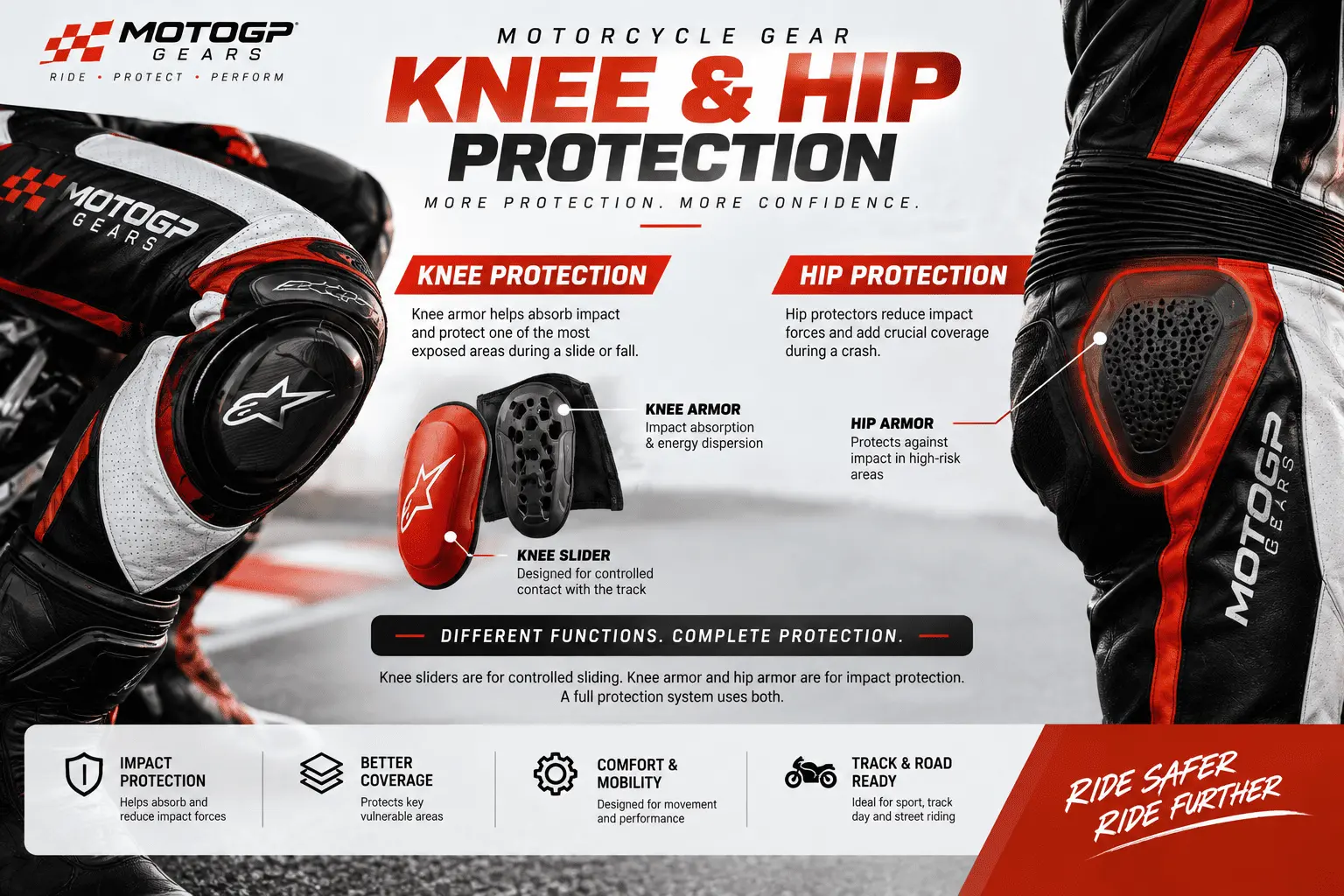
Knee Sliders and Knee Armor Are Not the Same
A knee slider is intended for controlled contact with the riding surface, while an internal impact protector is designed to attenuate impact energy. A racing suit can use both.
Back Protection
Direct Answer
Motorcycle back protectors are specifically covered by EN 1621-2. The standard defines protection levels and different protector coverage configurations.
When comparing motorcycle jackets or suits, check whether the back-protection pocket actually accommodates a certified back protector and whether the garment is sold with the protector or with an optional insert.
Chest Protection
Chest protection is addressed by EN 1621-3. The standard covers motorcycle chest protectors and includes different configurations for chest protection.
Configuration 01
Full Chest Protector
A single-piece configuration intended to cover the specified chest protection zone.
Configuration 02
Divided Chest Protector
A divided configuration designed to provide chest coverage while allowing different integration approaches within a garment.
Motorcycle Airbag Protection
Direct Answer
An airbag system adds another layer of protection rather than replacing the motorcycle garment, helmet or conventional impact protectors. EN 1621-4 addresses mechanically activated inflatable protectors for motorcycle riders.
Airbag technology can provide additional protection to areas that are difficult to protect using conventional inserts alone. Compatibility with the specific racing suit or jacket should always be checked before use.
EN 17092 Motorcycle Garment Classes
EN 17092 is concerned with protective garments for motorcycle riders and establishes different garment classes for different protective applications.
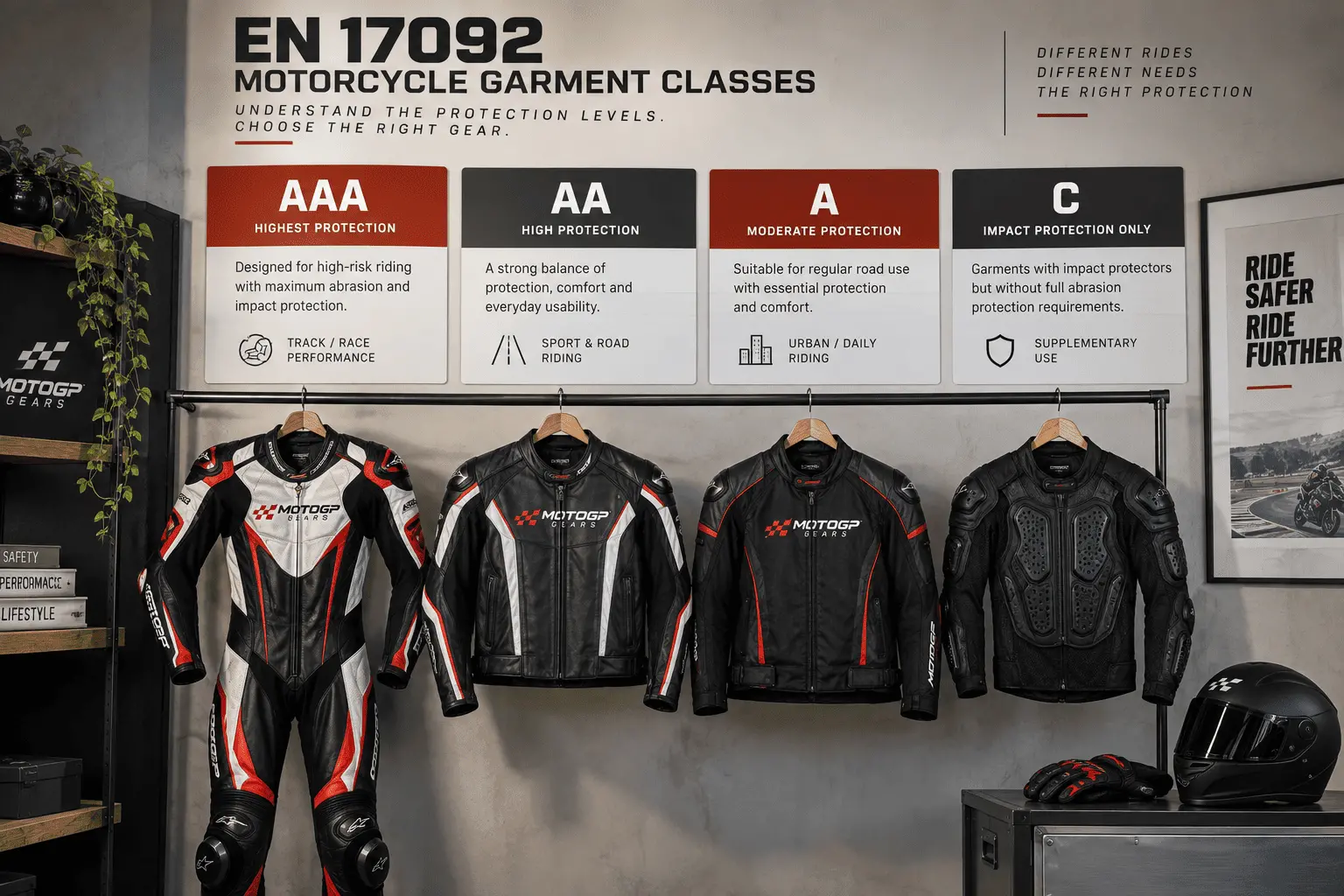
AAA
Highest Class
Highest class in the EN 17092 garment classification series.
AA
Protective Class
Protective garment class below AAA.
A
Practical Balance
Protective garment class intended around another balance of protection and practicality.
C
Impact Protection
Garment class carrying impact protectors without complete minimum abrasion protection.
Armor Is Only as Good as the Garment Around It
A motorcycle protector operates inside a larger construction system. Outer material, seams, panel layout, closures, stretch zones, protector pockets and retention features all influence how the gear performs and remains positioned.
Leather & Textile Construction
Leather is widely used in performance motorcycle apparel because of its abrasion-resistant characteristics and structured construction. Textile motorcycle garments can use different technical fabrics and reinforcement systems.
Seams & Reinforcement
Protective garments need more than a strong outer panel. Seam construction, reinforcement and stress-zone design all contribute to garment integrity.
Retention & Fit
Armor must stay where it is supposed to be. Sleeve adjustment, waist adjustment, secure closures, correctly sized protector pockets and an appropriate body fit all contribute to protection retention.
How Protection Priorities Change by Riding Type
Track Day
High garment protection, secure armor, strong retention and race-oriented construction.
Sportbike Road Riding
Impact protection, abrasion resistance, mobility and weather suitability.
Touring
Coverage, armor, abrasion protection and long-duration comfort.
Beginner Rider
Complete basic protection system with correctly fitted armor.
Motorcycle Armor Buying Checklist
✓ Identify the riding environment
✓ Check the actual garment standard
✓ Check the actual protector standard
✓ Confirm which body zones are protected
✓ Check Level 1 or Level 2 where applicable
✓ Verify whether the protector is included
✓ Check protector retention and pocket fit
✓ Confirm the garment fits correctly while riding
✓ Consider chest and back protection
The Simplest Buying Rule
Do not choose motorcycle gear because a listing only says “CE approved.” Check the exact garment classification, protector standard, protection level, body coverage, retention, fit and intended riding environment.
Build Your Motorcycle Protection System Around the Way You Ride
Start with your riding environment, then compare garment protection, impact-protector specifications, coverage, retention and fit.
Write a Review
Sur moi


Derniers articles

Articles connexes
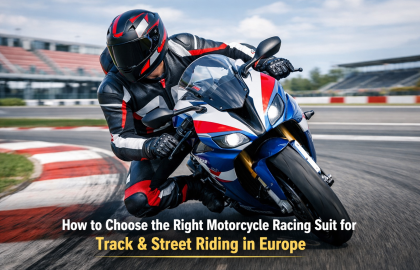
How to Choose the Right Motorcycle Racing Suit for Track & Street Riding in Europe
Learn how to choose the perfect motorcycle racing suit for safety, comfort, and performance. Discover leather...